






What the planning white paper means for infrastructure
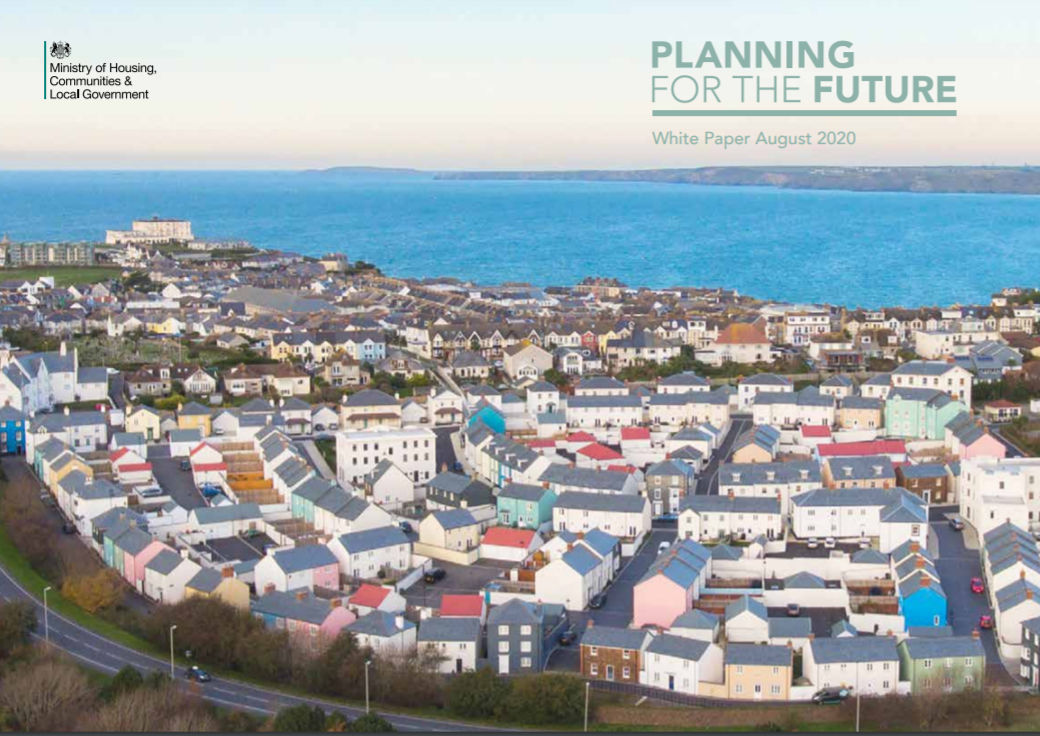
The government’s recently published planning white paper (Planning for the future) outlines policy proposals to radically overhaul the planning system.
|
| The government’s agenda is to deliver housing and other developments more efficiently. |
Contents |
[edit] Introduction
The long-awaited planning white paper was published by the government in August 2020, which proposes sweeping changes to the current planning system that are certainly not short on ambition. While the shift to a zonal-based planning system has attracted the most headlines, here we look at what some of the other proposals mean for infrastructure.
[edit] Planning for large-scale developments
The paper refers to the use of Development Consent Orders (DCO) to be used for 'exceptionally large sites.' This forms part of the government’s wider agenda to deliver housing and other developments more efficiently and quickly.
While the government has not committed further than to explore the use of DCOs for this purpose, it is something ICE has recommended in the past. In our 2019 State of the Nation report, we called for the UK government to amend the DCO process to enable large-scale housing developments to be delivered under it, ensuring greater coordination of housing delivery with nationally significant infrastructure, business and commercial projects.
This is important as DCOs could, in one fell swoop, secure all necessary powers and primary consents for all parts of the entire scheme – more than just planning permission – and ensure that all elements of a planning decision can be considered at the same time. This, in turn, could lead to infrastructure being regarded as more integral to developments than in other cases. The willingness from government to look at DCOs as a solution to deliver large developments is therefore a welcome step.
A new Infrastructure Levy
Developer contributions, in the form of Section 106 agreements and the Community Infrastructure Levy (CIL), will be replaced with a new Infrastructure Levy. This levy will be a fixed proportion of the value of the development, above a set threshold. Local authorities can also borrow against Infrastructure Levy revenues to forward fund infrastructure and speed up delivery further.
Revenues from the levy would be spent locally on economic and social infrastructure projects such as new roads, community amenities and discounted homes for local, first-time buyers.
CIL is currently voluntary for local authorities to implement and is most widely used in London and the South East, where land value is highest. However, uptake across other parts of the country is low – only 47% of all local authorities had used CIL as of January 2019. The move towards a single Infrastructure Levy that will provide contributions at a flat rate is positive.
However, this must not come at the cost of lower investment in areas of low land value. The levy seeks to benefit from increases in land value, but value uplift in some areas will be insufficient to fund the required infrastructure. This could have repercussions on the government’s ‘levelling-up’ agenda as the areas most in need of new housing and infrastructure could be deemed unviable by the set threshold.
Consideration must be given to how investment is still directed to these areas. ICE has previously called for the Housing Infrastructure Fund to ring-fence a specific amount of funding for areas of lower land value, and a similar policy could be applied here for the Infrastructure Levy.
[edit] Local and regional planning
The white paper outlines that local authorities, including mayoral combined authorities, will be 'liberated to plan'. This is important as the paper suggests that combined authorities could have a vital role in delivering large scale, cross-boundary developments. This wider-scale planning across geographic boundaries offers opportunities for more holistic infrastructure planning.
However, it does not extend to the same level as ICE’s 2019 State of the Nation report, which called for subnational infrastructure bodies to be formed. These bodies should be central to developing a regional infrastructure strategy that includes housing. By creating integrated regional housing and infrastructure strategies that are based on evidence, have cross-authority agreement and go beyond individual political cycles, infrastructure for housing could be planned in a far more strategic way than at present.
This article originally appeared on The Institution of Civil Engineers Infrastructure Blog on 18 August, 2020. It was written by David Hawkes, ICE Policy Manager.
--The Institution of Civil Engineers
[edit] Related articles on Designing Buildings Wiki
Featured articles
Check out some of the best features and news from Designing Buildings as well as key stories from around the web.
Grenfell investigation files passed to CPS

Angela Rayner apologises on behalf of the British state.

Electrical contractors need to understand the practical implications.

The real barrier to getting more value from digital technology.

Your guide to The Construction Reset at UKCW Birmingham.

Accommodating the Victorian and Edwardian working woman. Book review.
Rethinking passive fire protection in design

PFP demands the same level of design rigour as structure or services.

38% of Gen Zs feel safe when a fire door is wedged open.
Stunning images from around the world

Shortlist for CIOB’s Art of Building photography competition.

Guidance for conversion of traditional pre-1919 stone buildings.
Industrial heritage in the Ruhr

A marked difference to the fate of industrial landscapes in the UK.

Communities will be able to build their own clean energy.
Why diversity and inclusion matters for SMEs

CIOB’s D&I Charter shows how practical changes can support long-term growth.